

Enterprise News
A pioneer in the field of low-altitude safety
To both "fight" and "manage" the drone Hangzhou to promote low-altitude safety management
Time:2024-08-02


Editor's note: As a representative of new quality productivity, low-altitude economy was written into the government work report for the first time in the National Two Sessions this year, and the initiatives of active layout around the country are in full swing.
In the next few years, with the continuous development of commercial applications, China's low-altitude economic industry will form a trillion-level market scale. From now on, the tide news launched the "Low-altitude economic new quality engine" series reports, with a professional perspective and rich cases, to decode the code behind the growth of the industry.
Recently, Hangzhou issued the "Hangzhou Low-Altitude Economic High-quality Development Implementation Plan (2024-2027)" (hereinafter referred to as the "Implementation Plan"), proposing the construction of low-altitude traffic flight service platform and low-altitude traffic supervision platform.
In fact, as early as 2019, Hangzhou established the country's first city-built low-altitude safety integrated dispatching and command platform. This has changed Hangzhou's low-altitude safety from only cracking down on illegal flights to a low-altitude safety development model that focuses on both cracking down and management.
In the field of low-altitude economy, what are the characteristics of the "Hangzhou model" and what is the running logic behind it?
【 Special Topic 】 Low-altitude economy, trillion new quality productivity
Not only to "fight" but also to "control"
At present, low-altitude security is mainly concentrated in the fight against low-altitude dangerous flights in important economic targets, densely populated places, important military bases, airports and other places. In recent years, incidents such as drone black flight, drone invasion of privacy and even drone injury are common.
For example, in July 2023, when Zhou, a local in Changzhou, was operating a drone to sow fertilizer on a ridge of farmland, the blade of the drone hit Xu and killed him; In February 2024, the relevant departments of Hangzhou and Geneng Kosh cooperated to crack this year's first drone black flight near Xiaoshan Airport.
In the development of low-altitude economy, Hangzhou has been at the forefront of exploration. As early as 2019, Geneng Kosen cooperated with the relevant departments of Hangzhou to launch the Hangzhou citizen UAV public safety supervision system, which is the first low-altitude safety integrated dispatching and command platform built by the city as a unit in the country.
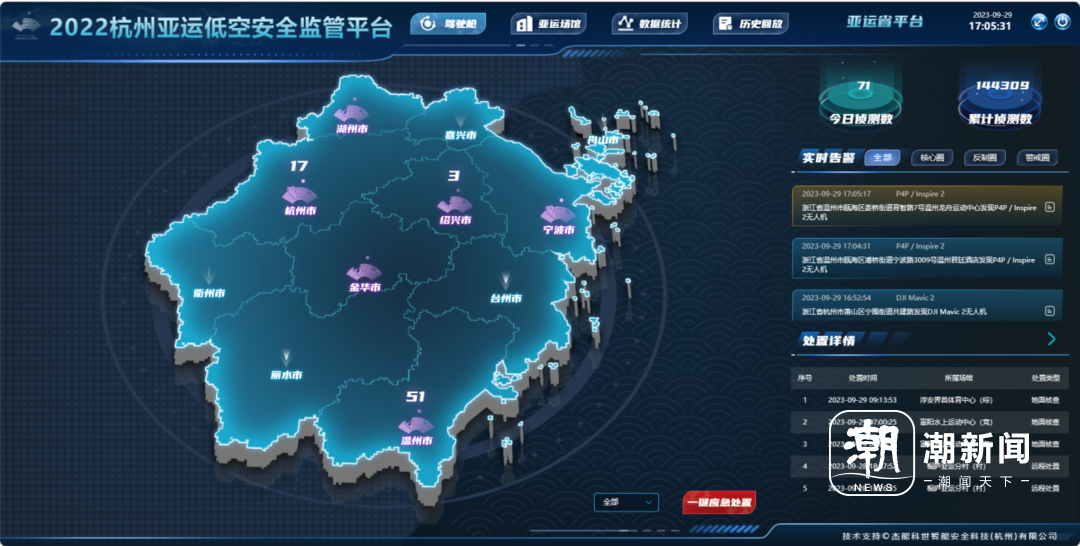
In October 2020, Hangzhou was selected as the first national civil unmanned aviation test zone, and became one of the first cities to explore the commercial operation of drone city scenarios.
Sun Zhongliang, the founder of Jieneng Keshi, said in an interview with the tide news reporter that the company has served Hangzhou Asian Games (FAD), Liangzhu Forum and other large-scale activities, in these case experiences, he has a deep understanding that low-altitude safety not only to "play", but also to "manage".
In 2023, Geneng Kosh began to develop the Qi Cloud Air low altitude service management platform, through the construction of front-end equipment network, perception and communication network, digital airspace network, digital service network, comprehensive situation map, intelligent link to the low altitude operation of various systems, to provide technical services for low altitude airspace.
The release of the "Implementation Plan" once again mentioned accelerating the construction of low-altitude management platforms, including the construction of low-altitude traffic flight service platforms and low-altitude traffic supervision platforms. The former provides airspace route application, plan declaration, communication navigation, information, meteorology and other services for low-altitude users; The latter realizes access approval, process supervision and other functions, interconnects with the flight service platform and superior supervision platform, realizes the dynamic transmission of information and data, and strengthens the supervision of the whole process of operation.
Increase awareness of low altitude safety
In 2022, an impressive thing happened to Geneng Kesh in the process of preparing for the Hangzhou Asian Games low-level safety work. Background monitoring found that Hangzhou Xiaoshan no-fly zone has been a drone signal, after more than a month of investigation, and finally found that it is a tower crane on a construction site.
The low-altitude economy is harder to see in the sky than anything you can see on the ground, so there is less attention. Although there is little attention, the hidden dangers brought by low-altitude safety are much higher than that of ground safety control.
Sun Zhongliang said that at that time, through a variety of technical analysis, the tower crane was still judged to be the exact drone signal, if not found this investigation, the low-altitude safety supervision system may continue to have false warnings. This practice tells us that there are limitations in relying solely on technical means, and professional manual research and judgment must be supplemented to make up for the shortcomings. At the same time, the algorithm of the UAV early warning system also needs to be continuously optimized in practice to ensure low-altitude safety more accurately and efficiently.
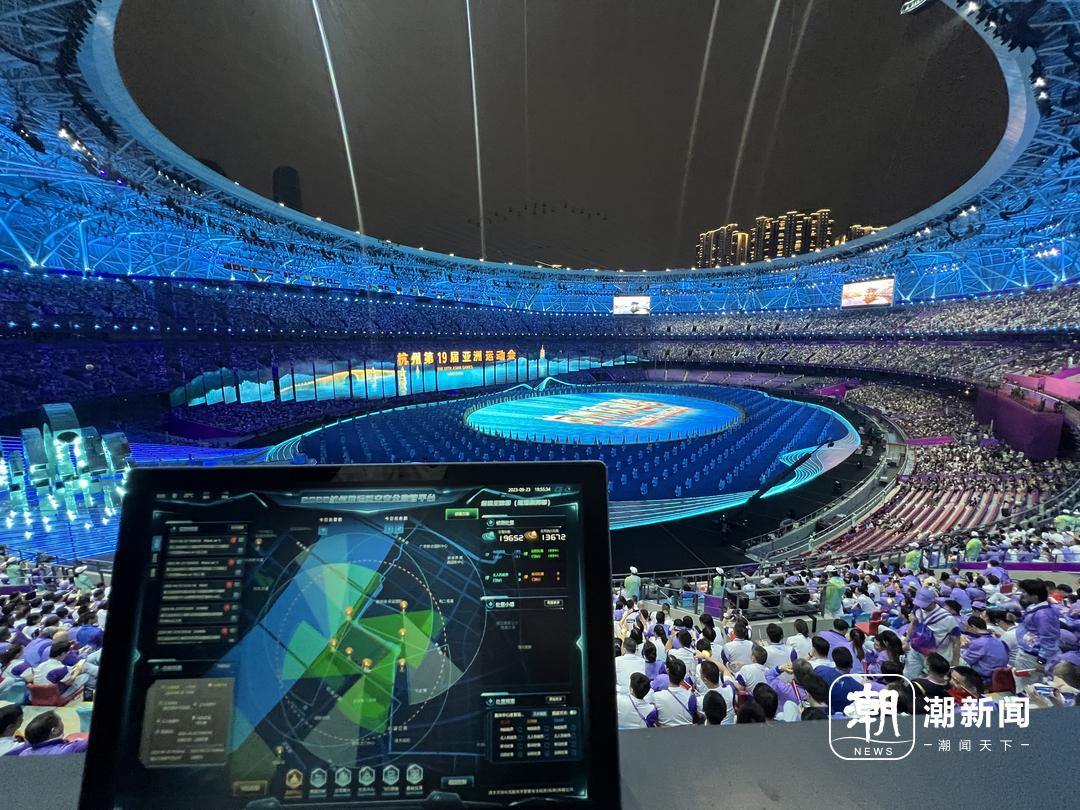
Jernen Kesh at the opening ceremony of the Asian Games. Photo: Jernen Kesh
"Low-altitude economic development is exciting, while enjoying the convenience, the awareness of low-altitude safety is equally important, and it is not that you can fly freely if you want to fly, nor can you fly freely." Sun Zhongliang said that what needs to be done now is to increase the popularity of low-altitude safety awareness.
At present, the management of unmanned aircraft belongs to civil aviation, but the actual low-altitude safety management is more in the local. Sun suggested that local governments need to ensure that laws and regulations can follow up the development and improvement, clarify their own city positioning, and introduce regulations on flight approval, flight zone demarcation, flight altitude and other elements.
In addition to laws and regulations, low altitude safety also needs to have industry standards. For example, clarify the restricted areas, height restrictions, pilot qualification requirements, etc., to promote the unification of technical standards and safety norms in the low-altitude safety industry.
Sun Zhongliang also said that in line with laws and regulations, the government urgently needs to build a complete low-altitude surveillance system. Although in terms of technology implementation, such as low-altitude security companies can provide solutions, from the perspective of supervision, the government should independently control the relevant data and systems to avoid excessive reliance on external entities to supervise.
Open now, technology enables low altitude
Genenkosy Intelligent Security Technology (Hangzhou) Co., Ltd.